




Property Management Appliance Repair Tips
Property management appliance repair works best with fast diagnosis, clear tenant updates, and reliable service that keeps units running with less downtime.
A tenant says the fridge is warm. Another unit has a dryer that will not start. The dishwasher in a vacant apartment is leaving water at the bottom. This is how property management appliance repair usually goes. It is rarely one big crisis. It is a stack of small problems that can turn into bigger ones if they sit too long.
For a property manager or landlord, the goal is simple. Keep the unit livable. Keep the tenant informed. Avoid repeat visits. That means knowing what to check first, when to call for service, and how to set up repairs so the job gets done without wasting a day.
Why property management appliance repair needs a different approach
A homeowner usually calls when one machine breaks. A property manager may be dealing with several units, different tenants, and access issues at the same time. The repair itself matters, but so does coordination.
The biggest delays often have nothing to do with the appliance. Nobody is home. The model number is missing. The tenant says the washer leaks, but the real issue is a drain backup. A refrigerator is not cooling, but the outlet has no power. These details change the visit.
That is why a good service call starts with clear information. What appliance is failing. What it is doing. What it is not doing. Whether the unit is occupied. Whether the appliance is built-in. Whether there are signs of leaking, burning smell, tripped breakers, or spoiled food.
In West Hollywood and nearby neighborhoods, many properties also have space limits, older hookups, stacked laundry units, or built-in kitchen appliances. That can affect repair time and parts.
The most common appliance problems in rental units
Refrigerators are high priority because food loss becomes a tenant issue fast. If the refrigerator is warm, the first question is whether the unit has power. The next is whether the fan is running and whether the freezer is also warm. A fridge that cools poorly can have a bad fan motor, a failed defrost part, dirty condenser coils, or a sealed system issue. Some are quick repairs. Some are not.
Washers fail in ways that create stress quickly. If a washer will not drain, the tenant may have clothes stuck inside. If it leaks, the concern shifts to floors and ceilings. In many cases, the problem is a clogged drain pump, a bad lid lock, a worn hose, or an unbalanced load that caused the machine to stop. But not every leak is from the washer itself. Sometimes the standpipe or drain line is the real problem.
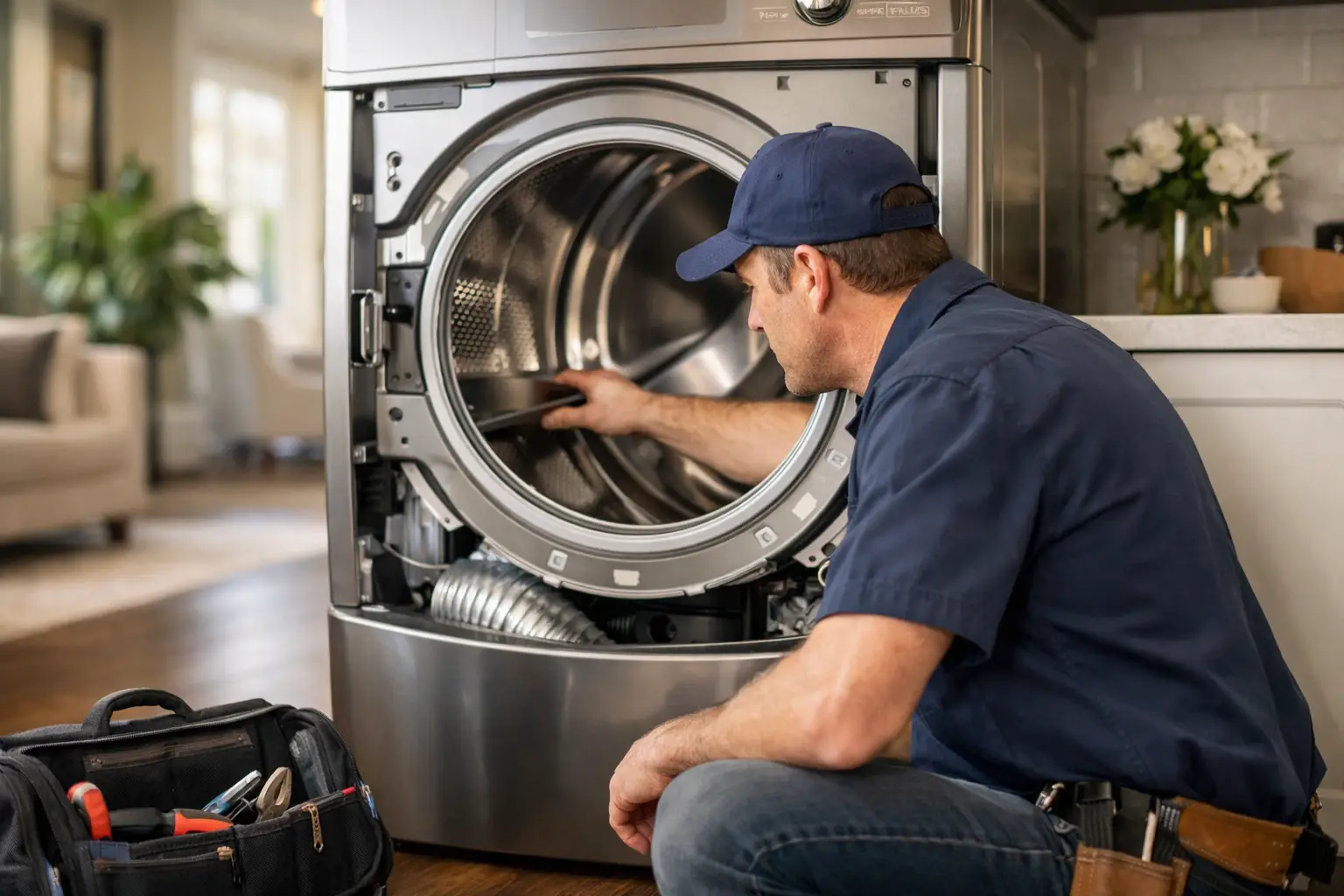
Dryers are common trouble calls in multi-unit properties. A dryer that runs but does not heat may have a failed heating part, thermostat, fuse, or power issue. A dryer that stops mid-cycle may be overheating because airflow is poor. This is one reason venting should not be ignored. A repair can fix the appliance, but a blocked vent can bring the same problem back.
Dishwashers often fail more slowly. Tenants may report cloudy dishes, standing water, or a door that drops hard. These can come from a worn pump, clogged filter, broken spring, or drain issue. Some problems are simple. Others need parts that match the exact model.
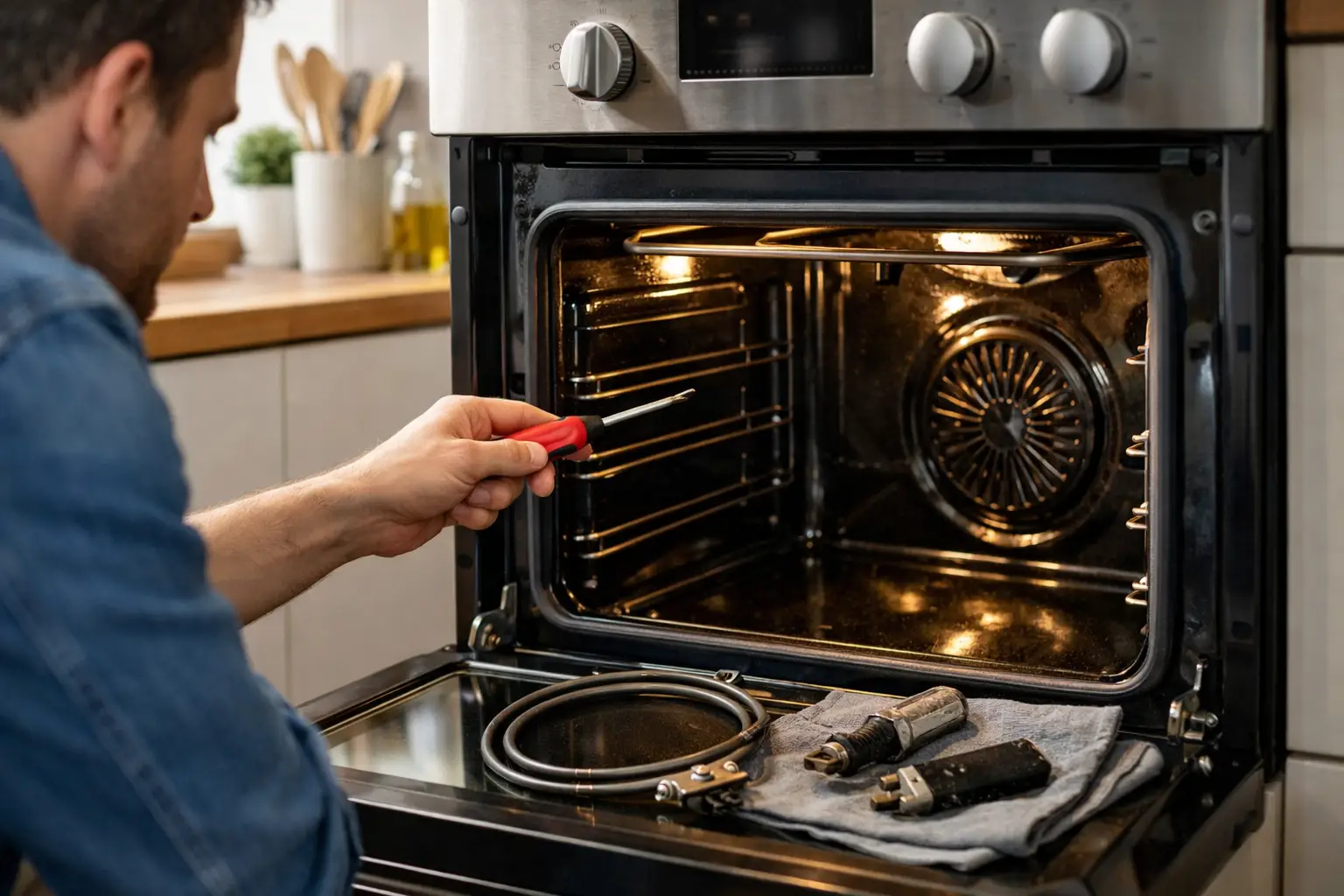
Ovens, ranges, and cooktops matter because they affect daily use of the kitchen. A gas oven that will not heat may have an igniter issue. An electric range with one dead burner may need a new element or switch. If the complaint is that cooking takes too long, the temperature may be off rather than fully failed.
What a property manager should ask before booking service
A few good questions can save a lot of time. Ask the tenant what the appliance is doing right now. Not what happened last week. Ask if there is power to the appliance. Ask if there is water on the floor, a burning smell, unusual noise, or an error code.
Photos help. A picture of the model tag, the inside of the fridge, the water under the dishwasher, or the control panel can be useful. If the appliance is in a tight closet or built into cabinetry, that matters too.
Access is the next issue. Confirm who will be on site. Confirm parking instructions if needed. Confirm whether the tenant has pets. This sounds small, but missed access is one of the most common reasons a repair gets delayed.
For landlords and apartment managers, it also helps to know the age of the appliance. Not because old means unrepairable. It depends on the brand, the part, and the condition. But age helps set expectations. A ten-year-old dryer with one failed part may still be worth fixing. An older refrigerator with a sealed system problem may not be.
When to repair and when to replace
This is where property management appliance repair becomes a budget question, not just a mechanical one. The cheapest option today is not always the lowest cost over the next year.
If the appliance has a clear single-part failure and the rest of the machine is in decent shape, repair usually makes sense. This is common with igniters, drain pumps, door latches, belts, and some control parts.
Replacement becomes more likely when the unit has repeated failures, poor parts availability, rust damage, major cooling system problems, or several worn parts at once. Downtime matters too. In a rental unit, waiting a long time for an uncommon part may cost more in frustration and tenant disruption than replacing the appliance.
There is no fixed rule that fits every unit. A property owner with matching kitchen appliances may choose differently than a manager trying to get a vacant apartment ready this week.
How good service reduces repeat calls
A lot of repeat calls happen because the first visit solved only part of the problem. Maybe the washer drained, but the hose that caused the leak was not addressed. Maybe the dryer heater was replaced, but the airflow problem that overheated it stayed in place.
Good repair work means finding the failure, checking related parts, and explaining what caused it. It also means being honest when a repair is likely to be temporary because the appliance has larger issues.
For property managers, clear communication matters just as much. You need to know what was found, what part is needed if follow-up is required, and whether the appliance should stay off until the repair is completed.
That is one reason local service helps. A local company serving West Hollywood, Beverly Hills, Hollywood, Fairfax District, Melrose Area, Beverly Grove, Miracle Mile, Hancock Park, Mid-Wilshire, and Hollywood Hills West can usually work through scheduling and return visits with less back-and-forth than a call center setup.
Practical ways to make appliance repairs easier in managed units
The best system is simple. Keep a basic record for each unit. Brand, model number, install date if known, and prior repairs. That gives you context fast when the next issue comes up.
It also helps to tell tenants what to report. Not just, the dishwasher is broken. Ask for symptoms. Is it not starting, not draining, leaking, or cleaning poorly? Better details lead to a better first visit.
If you manage small multi-unit properties, try to group non-urgent repairs when possible. That can reduce disruption. But do not wait on anything involving refrigeration loss, active leaking, or electrical smell.
For in-home service, clear approval terms matter too. Vertex Appliance Repair charges a $69 diagnostic fee, and that fee is waived if the repair is approved. Completed repairs and installed parts are backed by a 90-day warranty. For property managers, terms like that make decisions easier because the cost and next step are clear.
A few things tenants can check safely
There are basic checks that are reasonable before service is booked. Make sure the appliance is plugged in. Check whether a breaker has tripped. For refrigerators, make sure the temperature setting was not changed and the door is closing all the way. For dryers, clean the lint screen. For dishwashers, look for a clogged filter if the model allows easy access.
That said, tenants should not pull out built-in appliances, open panels, or try gas or electrical repairs. A quick check is fine. Guesswork is not.
What property managers really need from an appliance repair company
You need a company that shows up, diagnoses the problem clearly, and does not make the process harder than it already is. You need realistic timing. You need straightforward pricing. You need someone who understands that a broken washer in an occupied unit is not the same as a loose handle in a vacant one.
Most appliance problems are fixable. The hard part is often speed, access, and getting the right part without confusion. When the repair process is organized, tenant stress drops and turnover work moves faster.
If you manage rentals, treat appliance issues early. Small symptoms have a way of turning into bigger service calls, and those are always harder to fit into a busy week.