




Washer Repair or Replacement?
Not sure about washer repair or replacement? Learn the signs, costs, and smart next steps before you spend money on the wrong fix.
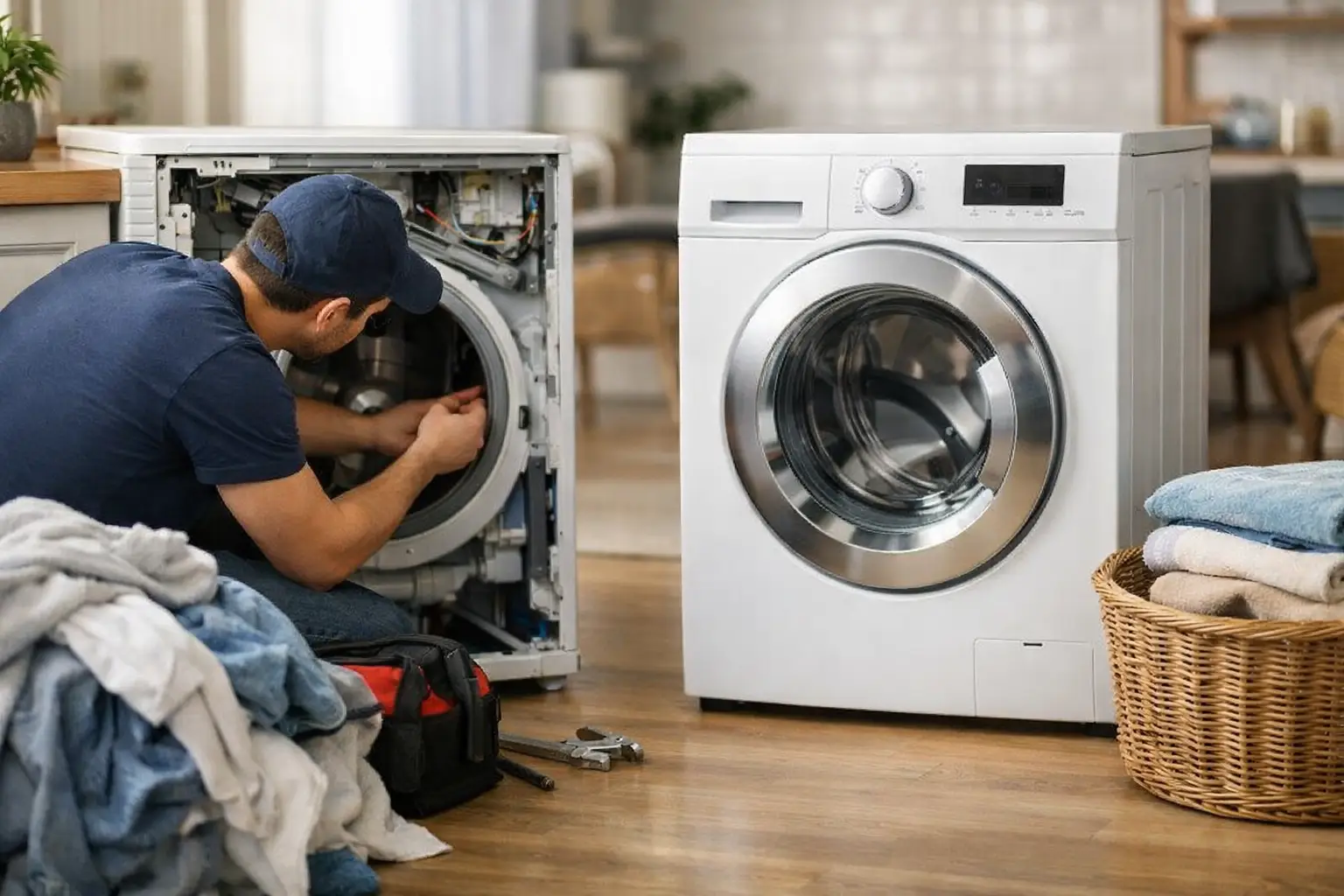
A washer usually gives you a warning before it quits for good. It may start leaving clothes too wet. It may shake hard on the spin cycle. It may stop draining, make a loud grinding sound, or show an error code you have never seen before. At that point, most people ask the same thing: should this be washer repair or replacement?
That question does not have one answer for every machine. It depends on the age of the washer, the part that failed, the cost of the repair, and how the unit has been working before the problem started. A simple fix is very different from a major failure. The goal is not just to get it running today. The goal is to spend money wisely.
When washer repair or replacement becomes the real question
Some washer problems look serious but are not. A clogged drain pump, a bad lid switch, a worn belt, or a failed door lock can stop the machine from running the way it should. These parts can often be replaced without replacing the whole washer.
Other problems are more expensive and more frustrating. A leaking tub seal, a damaged transmission, a failed main control board, or a bad bearing can push the repair cost much higher. In some cases, the labor is the bigger issue. The part may not be the most expensive thing, but getting to it can take time.
This is why a proper diagnosis matters. Guessing based on noise or symptoms alone can waste money. Two different failures can look the same from the outside.
Start with the age of the washer
Age is not everything, but it matters. If your washer is only a few years old and the rest of the machine is in good shape, repair usually makes more sense. That is especially true if the problem is limited to one part and there are no other signs of wear.
If the washer is much older and has already had more than one repair, replacement starts to look better. Older machines can still be worth fixing, but only if the repair is reasonable and the washer has been reliable up to this point.
A machine that has been noisy for months, leaks on and off, and now will not spin is not in the same category as a washer that suddenly stopped draining last week.
Symptoms that often point to repair
Some common issues are usually repairable. If the washer will not drain, the pump may be blocked or failed. If it will not start, the issue could be the power supply, lid switch, door latch, or control problem. If it fills but will not agitate or spin, that can come from a belt, motor issue, capacitor, or shift problem depending on the design.
Leaks are also worth checking before you assume the worst. A loose hose, cracked drain hose, bad inlet valve, or worn door boot can all cause water on the floor. Those repairs are often much less expensive than replacing the washer.
Even a noisy washer does not always mean the machine is done. Sometimes the cause is simple, like an unbalanced load, bad suspension rods, or worn shock absorbers. Those parts help control movement during spin. When they wear out, the washer can bang hard and walk across the floor.
Symptoms that may point to replacement
Some failures are harder to justify. If the tub bearing is failing, the washer may sound like a jet engine in spin. If the transmission is damaged, you may hear grinding, lose spin speed, or notice the washer getting stuck between cycles. If the outer tub is cracked or rust has spread through key parts of the frame, the repair can get expensive fast.
Control board problems can also be tricky. On some machines, replacing the board makes sense. On others, the part cost is high, availability is poor, and there is no good reason to put that money into an aging washer.
Multiple problems at the same time are another warning sign. If the washer needs a pump, suspension, and control work, replacement may be the smarter call. One repair is one thing. Stacking repairs on an older machine is different.
The cost rule most people use
A lot of homeowners use a simple rule. If the repair cost is close to half the price of a new washer, they lean toward replacement. That is not a perfect rule, but it is useful.
Still, price alone should not decide it. You also have to think about installation, delivery, haul-away, and time without a working washer. If you live in a condo or manage a rental unit in West Hollywood, replacing a washer can also mean access issues, scheduling delays, and tenant coordination.
A repair may cost more than you hoped, but still be the better value if it keeps a solid machine running without the hassle of a full swap.
What you can check before calling
There are a few safe things a homeowner can look at. Make sure the washer is getting power. Check if the breaker tripped. Look for a kinked drain hose. If it is a front load washer, inspect the door area for clothing stuck in the seal. If the washer is badly out of balance, try redistributing the load and running a spin cycle again.
Also check the water supply valves. If they are partly closed, the washer may fill too slowly or show an error. If the machine will not drain, look for obvious clogs in the filter area if your model has one and the owner manual allows access.
Do not take the machine apart unless you know what you are doing. Washers have sharp edges, heavy parts, and electrical components. Water and electricity are a bad mix.
Why a diagnosis matters more than a guess
People often replace a washer too early because the symptom sounds expensive. Loud noise does not always mean transmission failure. A no-start problem does not always mean a dead control board. And a leak from the front does not always mean the tub is cracked.
The opposite also happens. Someone tries to hold onto an old washer because it still turns on, even though the machine is already showing signs of bigger failure. They replace one small part, then another, then another. At some point, the money stops making sense.
A service call gives you a real answer. At Vertex Appliance Repair, the diagnostic fee is $69, and it is waived if you approve the repair. That helps people make the repair-or-replace decision with actual numbers, not guesses. Completed repairs and installed parts also come with a 90-day warranty.
Washer repair or replacement for rentals and multi-unit properties
If you are a landlord or property manager, the decision can be a little different. Downtime matters. Tenant complaints matter. Repeat service calls matter too.
If a washer in a rental unit has a straightforward repair and the machine is not too old, fixing it is usually the faster and cheaper path. But if the washer has already had repeat issues, replacement may save you more in the long run. The cheapest move today is not always the cheapest move over the next six months.
For shared laundry setups or small multi-unit properties, reliability matters even more. One failing washer can affect several residents. In that case, it often makes sense to be more strict about replacement once major parts start failing.
A few real-world examples
A washer that will not drain and hums during the drain cycle often has a pump problem or blockage. That is usually a repair call.
A washer that sounds very loud in spin, leaks from underneath, and leaves rust marks is a different story. That may point to bearing or tub problems. On an older unit, replacement is often the better choice.
A newer front load washer with a door lock error may look dead, but that kind of issue is often repairable. A ten-year-old washer with a bad control board and worn suspension is harder to justify.
The best choice is the one that fits the machine
There is no shame in replacing a washer that has reached the end of the road. There is also no reason to buy a new one just because the current machine stopped mid-cycle once.
The smart move is to look at the full picture. Age matters. Repair cost matters. Condition matters. How much trouble the washer has given you over time matters too.
If your washer is acting up, get the problem diagnosed before you spend money in the wrong direction. A clear answer is usually cheaper than a bad guess, and it gets your laundry routine back with less stress. If you need help in West Hollywood or nearby neighborhoods, call 323-747-7098.
Related articles

Built In Refrigerator Versus Freestanding: Which Fits?
Sub-Zero Error 24 EC — Check the Condenser Before the Defrost Parts